1
1
Standard touch keyboards rely on small targets.
Standard touch keyboards rely on small targets.
2
2
Typing speed slows and typo rates increase with age.
Typing speed slows and typo rates increase with age.
3
3
Traditional search ignores natural rhythmic instincts.
Traditional search ignores natural rhythmic instincts.
1
Standard touch keyboards rely on small targets.
2
Typing speed slows and typo rates increase with age.
3
Traditional search ignores natural rhythmic instincts.
Rhythm Search uses a pattern-matching algorithm to identify items by their rhythmic signature.
Rhythm Search uses a pattern-matching algorithm to identify items by their rhythmic signature.
Rhythm Search uses a pattern-matching algorithm to identify items by their rhythmic signature.
1
1
Korean Speakers: Tap the button in relaxed rhythm of how you speak the item's name.
Korean Speakers: Tap the button in relaxed rhythm of how you speak the item's name.
2
2
Non-Korean Speakers: Use the character count and spacing as your beat map*.
Non-Korean Speakers: Use the character count and spacing as your beat map*.
*e.g., "구-글-[Space]-크-롬" = 2 Taps, Short Pause, 2 Taps.
*e.g., "구-글-[Space]-크-롬" = 2 Taps, Short Pause, 2 Taps.
1
Korean Speakers: Tap the button in relaxed rhythm of how you speak the item's name.
2
Non-Korean Speakers: Use the character count and spacing as your beat map*.
*e.g., "구-글-[Space]-크-롬" = 2 Taps, Short Pause, 2 Taps.
please view on a larger screen to learn more.
Background
Background
01
I wanted to explore what searching via a "Smart Ring" would look like.
"type-free" navigation would reduce the need for tiny and typo-prone touch keyboards.
Benchmark
Benchmark
02

Design
03
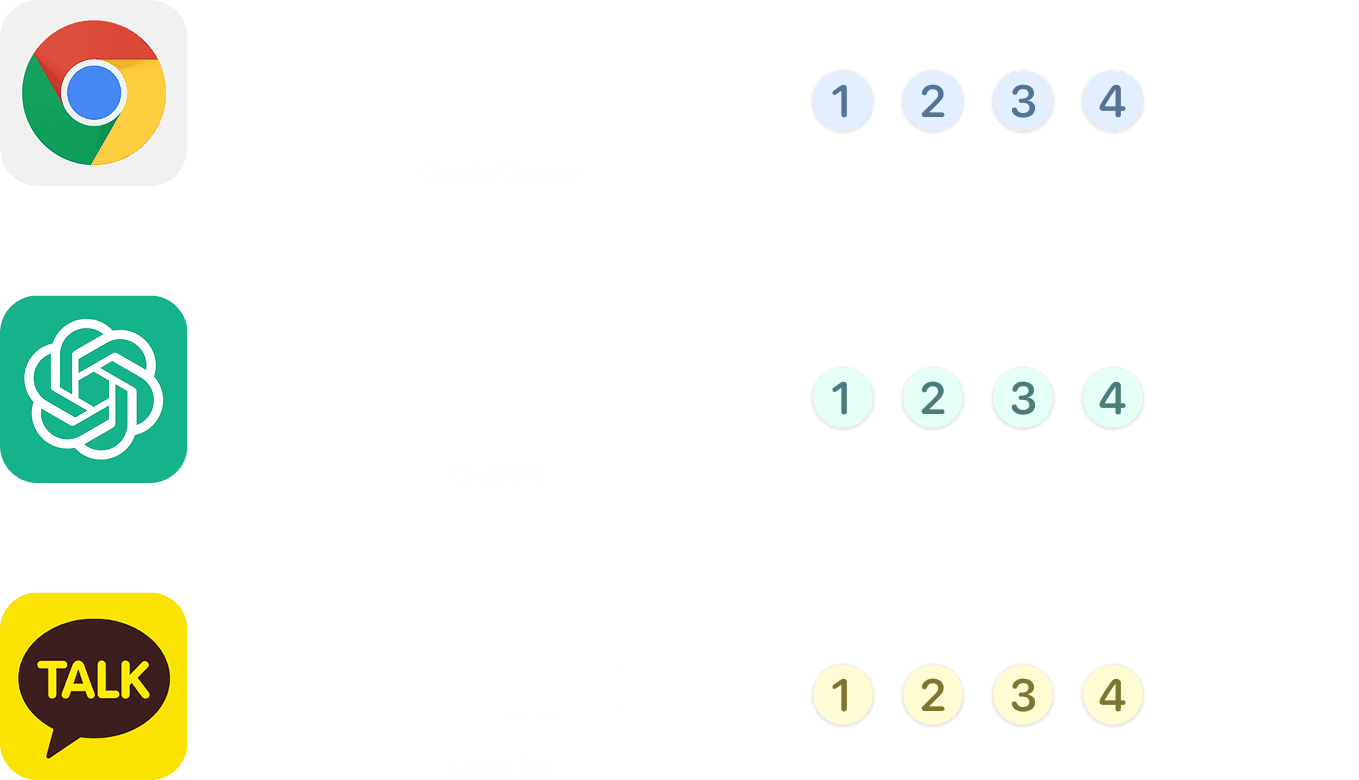
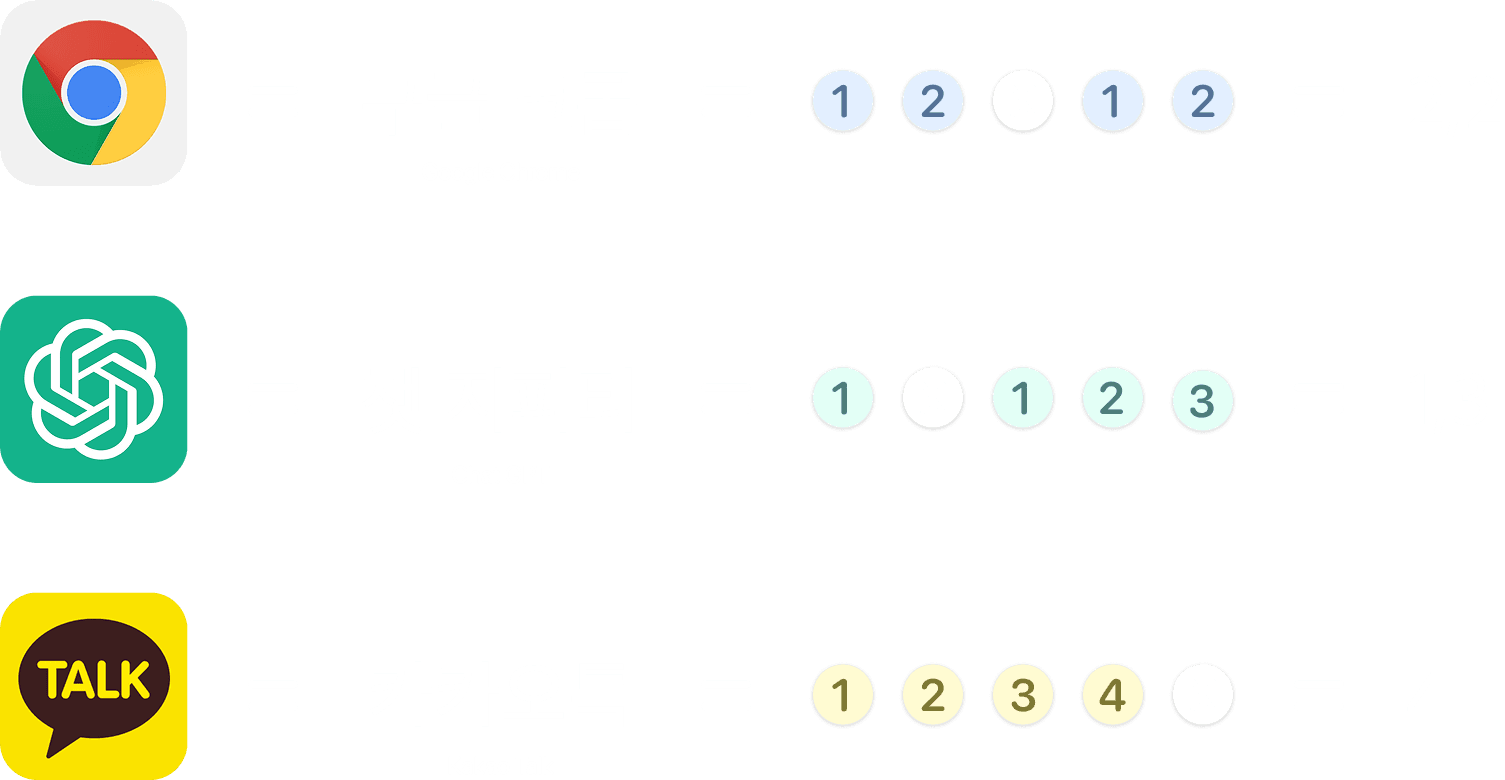
I engineered an algorithm to map these speech rhythms to physical inputs.
it translates the cadence of how a user naturally speaks an item's name into a recognizable pattern.

For rhythmic duplicates, I repurposed simple tapping as a visual tie-breaker.
the remaining items are sorted into columns, each assigned a specific number of taps.